
Mahamrityunjay Jaap Puja
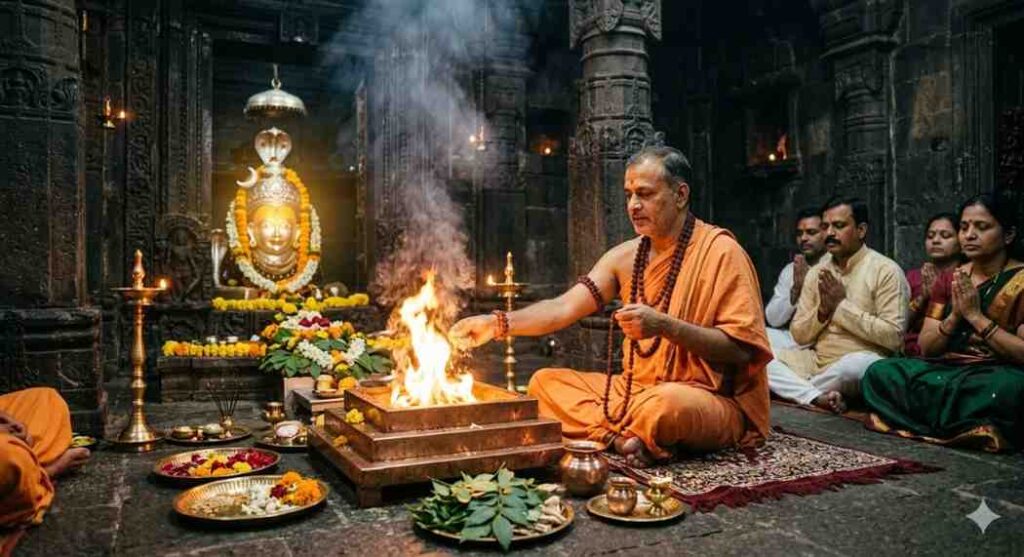
Performing the Mahamrityunjay Jaap Puja is a special spiritual practice, especially when done at the holy Trimbakeshwar Shiva Temple. This ritual is focused on Lord Shiva, who is known as the one who overcomes death. It is done to ask for protection from serious diseases, sudden death, and major problems in life. Pandit Rudra Shastri Guruji, a respected pandit who follows the Authentic Pandit in Trimbakeshwar Nashik, has over 25+ years of experience in this important Vedic ceremony. His deep knowledge ensures that each mantra is sung with the right sound and timing to bring divine healing energies.
What is Mahamrityunjay Mantra?
The Mahamrityunjay Mantra is a very strong and old verse from the Rig Veda and Yajur Veda. It is also called the “Moksha Mantra” or the “Death-Conquering Mantra.” This mantra is different from others because it focuses on improving both the body and mind of a person. It is a direct prayer to Lord Shiva, who is called Tryambaka, meaning the three-eyed one. The prayer asks for freedom from the cycle of life and death, just as a ripe fruit falls naturally from a vine. With the help of an expert like Pandit Rudra Shastri Guruji, chanting this mantra can be a powerful way to heal and grow spiritually and physically.
35000+
Pooja Perform till Date
80000+
Satisfied Yajman's
Best Mahamrityunjaya Mantra Jaap Puja pandit in Trimbakeshwar
When it comes to doing complicated Vedic rituals, the priest’s authority and family background are very important. Pandit Rudra Shastri Guruji is known as the top expert for performing the Mahamrityunjay Mantra Jaap Puja in Trimbakeshwar. His family has been serving the Trimbakeshwar Jyotirlinga for many generations. With over 25 years of experience, Guruji makes sure that the Mahamrityunjay Jaap Puja is done exactly as the ancient texts say. His office helps devotees with everything, from getting the needed items to the final Havan, ensuring a smooth and real spiritual experience in the holy city of Nashik.
Mahamrityunjay mantra in Hindi and Sanskrit
For the benefit of devotees, it is essential to understand the mantra in its original form. The Mahamrityunjay Mantra in Sanskrit is:
ॐ त्र्यम्बकम् यजामहे सुगन्धिम् पुष्टिवर्धनम्। उर्वारुकमिव बन्धनान् मृत्योर्मुक्षीय माऽमृतात्॥
In Hindi, it translates to a prayer seeking worship of the three-eyed Lord who nourishes all beings. We pray to be liberated from death and attachment, leading us toward immortality. Pandit Rudra Shastri Guruji emphasizes the importance of correct Sanskrit pronunciation during the mahamrityunjay jaap puja, as the vibration of each syllable is what activates the healing properties of the universe.
Meaning of Mahamrityunjaya Jaap
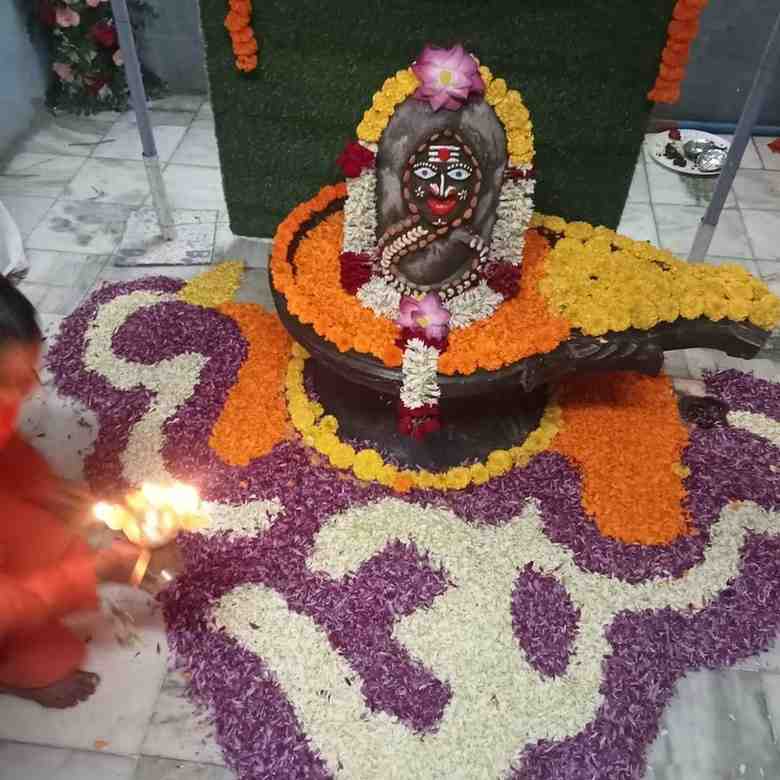
The term Mahamrityunjaya Jaap comes from three Sanskrit words: Maha, which means great, Mrityu, which means death, and Jaya, which means victory. So, the direct meaning is “The Great Victory Over Death.” Jaap means repeating the mantra over and over again. This practice is not only about avoiding death but also about overcoming the death of the ego and negative thoughts inside us. When people do this Jaap in a holy place like Trimbakeshwar, they try to face the fear of the unknown and find the courage to go through life’s toughest times with the help of Lord Shiva’s grace.
History of Mahamrityunjaya Mantra
The story of the Mahamrityunjaya mantra comes from Hindu myths. It is said to have been given to Sage Markandeya, who was supposed to pass away at sixteen. Because of his strong faith and by repeating this mantra constantly, Lord Shiva showed up to save the boy from Yama, the god of death. Another story says the mantra was given by Rishi Vashistha. For thousands of years, this mantra has been kept by the Vedic sages and shared through family lines, like that of Pandit Rudra Shastri Guruji. It still holds power and is important for people today, even in 2026.
Significance of Mahamrityunjaya Mantra
- Conquering “Apamrityu” (Untimely Death): The main purpose of this mantra is to help people avoid sudden accidents, serious injuries, and unexpected death. It works like a protective shield (Kavach) for those in dangerous situations.
- The Science of Rejuvenation: Sometimes called the Moksha Mantra, it does more than just save lives; it also helps restore health. The sounds are thought to help the body heal cells, which aids in recovery from serious or hard-to-treat illnesses that don’t have clear medical explanations.
- Psychological Fortification: In a time when people feel a lot of stress and worry, this mantra is a strong tool for the mind. It helps people deal with the fear of death and loss, replacing fear with a deep sense of calm and safety (Abhaya).
- Astrological Remedy for “Markesh” Dasha: In Vedic astrology, certain time periods (Dashas) are considered risky for life. The Mahamrityunjay Jaap is the best solution to deal with the harmful effects of Saturn (Shani), Rahu, and Ketu that threaten long life.
- Karmic Purification: The mantra is like a spiritual fire that burns away the past accumulated sins (Sanchit Karma) that cause repeated physical pain or mental blocks in the present.
- The “Urvarukamiva” Principle (Liberation): This is especially important for those seeking spiritual growth. It uses the image of a cucumber falling freely from its vine to show how one can achieve freedom (Moksha) from worldly things without any struggle.
- Vibrational Harmony (Chakra Alignment): Each of the 32 syllables in the mantra connects to different energy points in the body. Chanting it properly, with the guidance of a Tamrapatra Dhari Pandit, aligns the body’s energy with the cosmic energy of Lord Shiva.
- Peak Power at Trimbakeshwar: While the mantra works anywhere, its power is especially strong at the Trimbakeshwar Jyotirlinga. This place is said to be where the nectar of immortality (Amrit) fell, making the Mahamrityunjay Jaap here especially powerful and effective.
Mahamrityunjay Puja and Jaap
The Mahamrityunjay Puja and Jaap is a full ritual that does more than just chanting. It starts with setting up the Shiva Kalash and calling upon the deity. The Jaap is the main part where the mantra is said a certain number of times, usually 1.25 lakh times, for the best results. This is done by a group of trained Vedic Brahmins. Pandit Rudra Shastri Guruji carefully watches over the sessions to keep the environment pure and sacred. Combining the ritual worship (Puja) with the focused chanting (Jaap) creates a strong energy that helps the person for whom the puja is done.
Rules of Mahamrityunjay Jaap
To get the best results, it’s important to follow the mahamrityunjay jaap strictly.
Here are the key rules:
- Purity: Both the person doing the jaap and the priests need to stay physically and mentally clean during the whole process.
- Direction: The puja should be done facing either North or East.Mala: You must use a Rudraksha Mala to keep track of the jaap counts.
- Discipline: The jaap should be done continuously for a set number of days without stopping.
- Sankalp: Before starting, you need to clearly set your intention, known as Sankalp. Pandit Rudra Shastri Guruji helps devotees follow these steps to make sure the ritual works properly.
Benefits on Mahashivratri of Mahamrityunjay Puja
Doing the Mahamrityunjay Puja on Mahashivratri brings big spiritual benefits. Mahashivratri is the night when the energy of Shiva is strongest on Earth. Saying the mantra during this time is thought to be much more powerful than on other days. It’s especially good for people wanting a miraculous healing from long-term health problems or to remove bad karma that has built up over many years. Many followers book their appointments with Pandit Rudra Shastri Guruji well in advance for this special night in Trimbakeshwar to take advantage of this strong cosmic energy.
Benefits of Mahamrityunjaya Mantra
The mahamrityunjaya mantra has many good effects. It helps the body heal faster after surgery or from long-term health issues. It also helps the mind stay clear, lowers stress, and gives a feeling of bravery. Spiritually, it connects a person with the divine energy of Lord Shiva. This mantra is also very useful for:
- Helping a person live longer and feel more energetic.
- Keeping the family safe from harmful energies.
- Bringing calm and health into a home where people often get sick.
- Overcoming problems like “Kaal Sarp Dosh” or other astrological issues when used with special peace ceremonies called Shanti pujas.
Mahamrityunjay Puja cost
The total cost includes everything such as pandit dakshina, microphone system, food, clothing, and other things. If you want to place the 11 Lakh Jaap, then one hall will be beautifully decorated. There will be a microphone system, dhoti, asanas, Parana, Jaap mala, panchapatra, planning for puja, food facility, fan system, and so on. In this 11 Lakh Jaap, the cost will be just 2 lakh rupees only.If you are placing 5.5 Lakh Jaap, the cost will be 1 lakh rupees. For 2.5 Lakh Jaap, the cost will be 80 thousand rupees only. In the case of 1.25 Lakh Jaap, the cost will be around 50 thousand rupees only.
You might come across some Brahmins who promise to complete the puja for just 30 thousand rupees. But do not go for that because they may take the money and not perform the puja properly, leading to failure. So if you want the puja to be completed properly, contact us and get the proper results. After the puja, you can see the results in a few days, and it will help eliminate all your problems and bring peace into your life.We know our charges are higher because all our work is done properly, and the Brahmin is an expert who has studied in this field. That’s why they charge money for the service. You can contact Rudra Shastri Guruji by calling 9422449289 for maha mrityunjaya havan vidhi, kaal sarp dosh puja, narayan nagbali puja, pitra shanti pooja, etc., at Trimbakeshwar, Nashik.
Best time to perform Mahamrityunjay Jaap Pooja
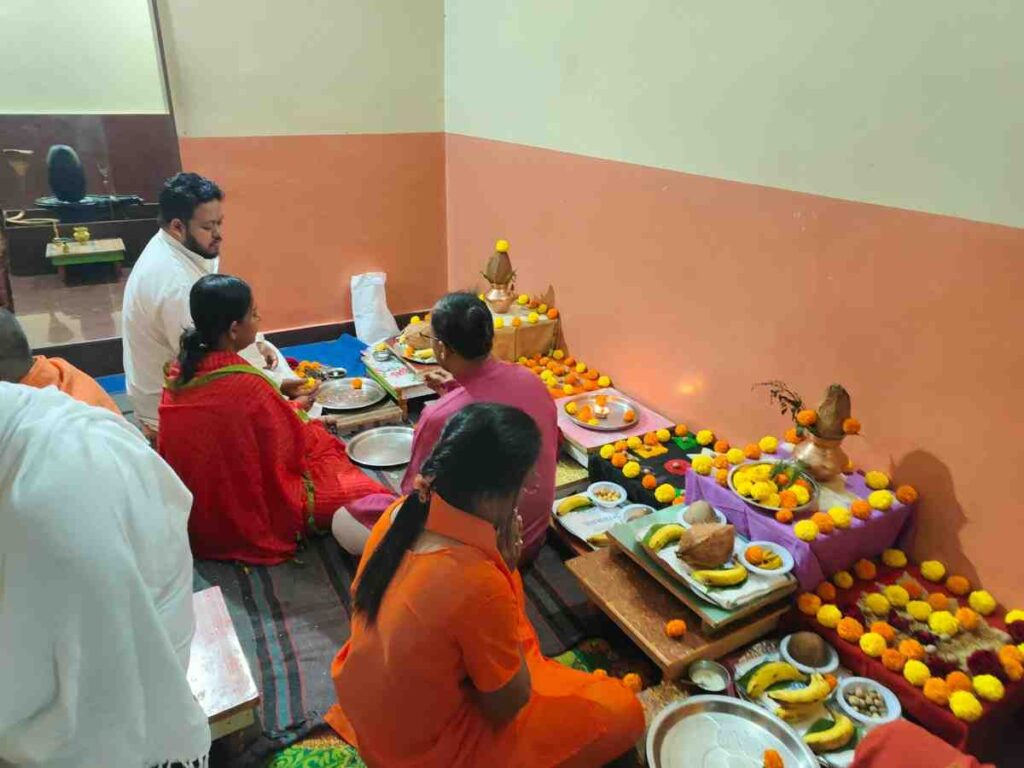
The puja can be done anytime in an emergency, but the best time to perform the Mahamrityunjay Jaap Pooja is during Brahma Muhurta, which is early in the morning, or on Mondays, which are special days for Lord Shiva. Other good times are during the month of Shravan, MahaShivratri, on Pradosh day, or when specific planetary positions match what’s shown in your kundali. To find the best time that works for your birth chart, it’s best to consult Pandit Rudra Shastri Guruji.
Mahamrityunjay Puja vidhi include
A standard mahamrityunjay puja performed by Guruji includes:
- Sankalp: Making a formal wish or intention for the puja.
- Ganesh Pujan: Calling upon Lord Ganesha to remove any obstacles.
- Kalash Sthapana: Placing a sacred pot that symbolizes the universe.
- Abhishek: Pouring milk, water, and honey on the Shivalinga as an offering.
- Mantra Jaap: The main chanting of mantras by Vedic Brahmins.
- Havan: Performing a fire ritual at the end to complete the prayers.
- Aarti and Donation: Ending with a light offering and giving charity to those in need.
Mahamrityunjay havan vidhi samagri
The success of the Mahamrityunjay Havan depends significantly on the purity and authenticity of the materials used. Under the expert supervision of Pandit Rudra Shastri Guruji, who brings over 25+ years of experience to the sacred grounds of Trimbakeshwar, every item is handpicked to ensure it aligns with ancient Vedic scriptures. A Mahamrityunjay havan vidhi samagri list is extensive because it represents a complete offering of the five elements to Lord Shiva.
Below is a detailed and long list of the essential samagri required for a standard Mahamrityunjay Jaap Puja and Havan:
1. Primary Abhishek Samagri (Liquid Offerings)
The ritual usually begins with a grand Abhishek of the Shivalinga to cool and please the deity before the fire ritual starts.
- Ganga Jal: Purifying sacred water.
- Raw cow milk: symbol of sustenance and purity.
- Fresh Curd: For wealth and offspring.
- Pure Honey: To infuse one’s voice and life with sweetness.
- Ghee: Clarified butter is a representation of light and spiritual wisdom.
- Sugarcane juice: Provided to alleviate poverty and promote health.
- Rose Water & Itra: For an exquisite scent that delights the senses, use rose water and itra.
- Panchamrit: A particular combination of the five liquids mentioned above.
2. Core Havan Samagri (The Fire Offerings)
The Havan is the soul of the ceremony, where the “Sawa Lakh” (1.25 lakh) mantras are sealed through fire sacrifices.
- Havan Samagri Mixture: A pre-blended blend of dry herbs such as Guggul, Jatamansi, and Agar-Tagar is called Havan Samagri Mixture.
- Black sesame (til): Crucial for clearing ancestral doshas and bad energy.
- Barley (Jau): Stands for the desire for a healthy and abundant existence.
- Ghee for Ahuti: To keep the sacred fire going, large amounts of cow ghee are required.
- Kamal Gatta (Lotus Seeds): Provided especially to guarantee financial stability and invite Goddess Lakshmi.
- Panchmeva : Cashews, raisins, almonds, and other dry fruits are offered to the gods as sustenance (Panchmeva).
- Sugar & Gud (Jaggery): To counterbalance the fire with sugar.
- Bhojpatra: An ancient bark used to write special wishes to be burned.
3. Sacred Wood and Ghee
The type of wood used in the Mahamrityunjay havan vidhi is not random; it must be “Samidha” wood that carries spiritual significance.
- The most popular and lucky fuel for Vedic Havans is mango wood (Aam ki Lakdi).
- Small amounts of Sandalwood Sticks are added because of their strong spiritual energy.
- Upala, or Cow Dung Cakes, are used to light and keep a traditional, constant heat.
- For the first ignition and the last Aarti, use Camphor (Kapur). Adorn the Havan Kund and the god. It is imperative that the wood used in the Mahamrityunjay havan vidhi be “Samidha” wood, which has spiritual importance.
4. Auspicious Leaves and Flowers
- Bel Patra (Wood apple leaves), are a favorite of Lord Shiva; the trifoliate leaf symbolizes Shiva’s three eyes.
- Because of their therapeutic and spiritually protective qualities, Aak (Madar) flowers are specifically employed in Mahamrityunjay ceremonies.
- Dhatura Fruit and Flower: A representation of the ego’s demise.
- Mango leaves are used to adorn the Havan altar and Kalash.
- Typically composed of marigold or white flowers, Fresh Garlands are used to embellish the Havan Kund and the deity.
5. Sacred Utensils and Accessories
- Havan Kund: The ceremony is performed in a copper or clay fire pit.
- Wooden spoons called Sruva and Pali are made especially for putting samagri and ghee into the fire.
- Kalash (Copper Pot): To contain the holy water that symbolizes the universe.
- Priests and devotees use the Rudraksha Mala for Mahamrityunjay Jaap.
- In order to keep the devotee grounded and energetically insulated throughout the hours of chanting, Kusha Mat (Aasan) is used.
- For protection, mauli (red sacred thread) is tied around the kalash and wrists.
6. Final Purnahuti Items (Completion Materials)
For the Mahamrityunjay Puja in Trimbakeshwar to conclude, a “Purnahuti” or last sacrifice is necessary.
- Dry Coconut (Gola): Packed with dry fruits and ghee, this symbolizes the devotee’s complete ego sacrifice.
- Panch Dhatu (Five Metals): Tiny bits of copper, silver, gold, and other metals that are occasionally added to represent monetary wealth.
- Red or white cloth: To cover the Kalash or to wrap the last offerings.
- Dakshina: Financial contributions made to the Vedic Brahmins who conducted the jaap.
Expert Assistance for Your Puja:
Managing such an extensive list can be overwhelming for a devotee. When you book your ritual with Pandit Rudra Shastri Guruji, his team takes complete responsibility for sourcing the highest quality Mahamrityunjay havan vidhi samagri. This allows you to focus entirely on your devotion and healing while Guruji ensures that every Shastric requirement is met with 100% authenticity.
Significance of mahamrityunjay Jaap Pooja
The science of sound vibrations is the foundation for the significance of mahamrityunjay jaap (chap) pooja. Every word in the mantra has a resonance with the human body’s chakras. The presence of the Jyotirlinga enhances the energy when it is conducted at a “Siddha Peetha” such as Trimbakeshwar. Because of the strength of the priest’s purpose and the site’s holiness, this puja can be performed “in-absentia” for a loved one who is too sick to travel, providing them with the same spiritual benefits.
Number of jaap and precaution
The ritual’s success depends on the quantity of jaap. It is generally advised to use 1.25 lakh (Sawa Lakh) mantras to resolve significant life difficulties. 11,000 or 21,000 chants might be enough for less ambitious goals. In terms of safety measures, the devotee should abstain from alcohol and non-vegetarian food and keep a composed attitude throughout the puja days. Since improper chanting can result in a lack of results, it is also crucial to make sure that the priests are truly learned Brahmins. You can be confident that every effort is made to preserve the purity of the ceremony when you work with Pandit Rudra Shastri Guruji.
What to expect after mahamrityunjay Puja?
A strong sensation of calm and a discernible change in energy are what to anticipate following Mahamrityunjay Puja. Many followers claim a dramatic improvement in seemingly stagnant health issues, a clearing of mental fog, and the elimination of “bad luck” that had been plaguing their careers. The physical manifestations often occur 21 to 41 days after the puja is finished, but the spiritual consequences are immediate. You can maintain the good vibes created during your time at Trimbakeshwar by according to Pandit Rudra Shastri Guruji’s post-puja guidance, which includes doing a few daily chants.
FAQ's
What is Mahamrityunjay Jaap Puja?
Mahamrityunjay Jaap Puja is a powerful Vedic ritual dedicated to Lord Shiva. It involves chanting the Mahamrityunjay Mantra to seek protection from negative energies, health issues, and untimely death while inviting peace, healing, and longevity.
What are the benefits of Mahamrityunjay Jaap Puja?
Protection from serious illnesses, Relief from fear, stress, and anxiety, Long life and good health, Removal of negative energies, Spiritual growth and inner peace, Protection from accidents and untimely death and Many more
When should Mahamrityunjay Jaap Puja be performed?
This puja can be performed at any time, but it is especially beneficial during: Mahashivratri, Shravan month, During health problems or difficult life situations, On auspicious Nakshatras and Mondays according to muhurta.
Who should perform Mahamrityunjay Jaap Puja?
Anyone facing health issues, fear, stress, financial instability, or life obstacles can perform this puja. It is also recommended for those seeking spiritual protection and peace.
Can Mahamrityunjay Jaap Puja be done for someone else?
Yes, this puja can be performed on behalf of another person, especially for their health, recovery, and protection from negative situations.
Can Mahamrityunjay Jaap be done online?
Yes, many pandits offer online Mahamrityunjay Jaap services where the puja is performed on your behalf at Trimbakeshwar and you can attend via video call.
Can I attend the puja in person if booked online?
Some platforms allow physical presence, especially if the puja is at Trimbakeshwar or Nashik. Check with the provider beforehand.
Is this puja suitable for health recovery?
Absolutely. Maha Mrityunjaya Puja is especially recommended for those suffering from chronic illnesses, undergoing surgeries, or seeking spiritual protection.
What is the ideal frequency to perform this puja?
Once a year is considered ideal for general protection. In critical situations, people perform it more frequently (monthly or weekly).
Best Pandit For Mahamrityunjay Jaap Puja in Trimbakeshwar?
Pandit Rudra Shastri Guruji have 25+ Years of experience in Mahamrityunjay Puja Trimbakeshwar, you can contact Panditji for information and Pooja Booking.

